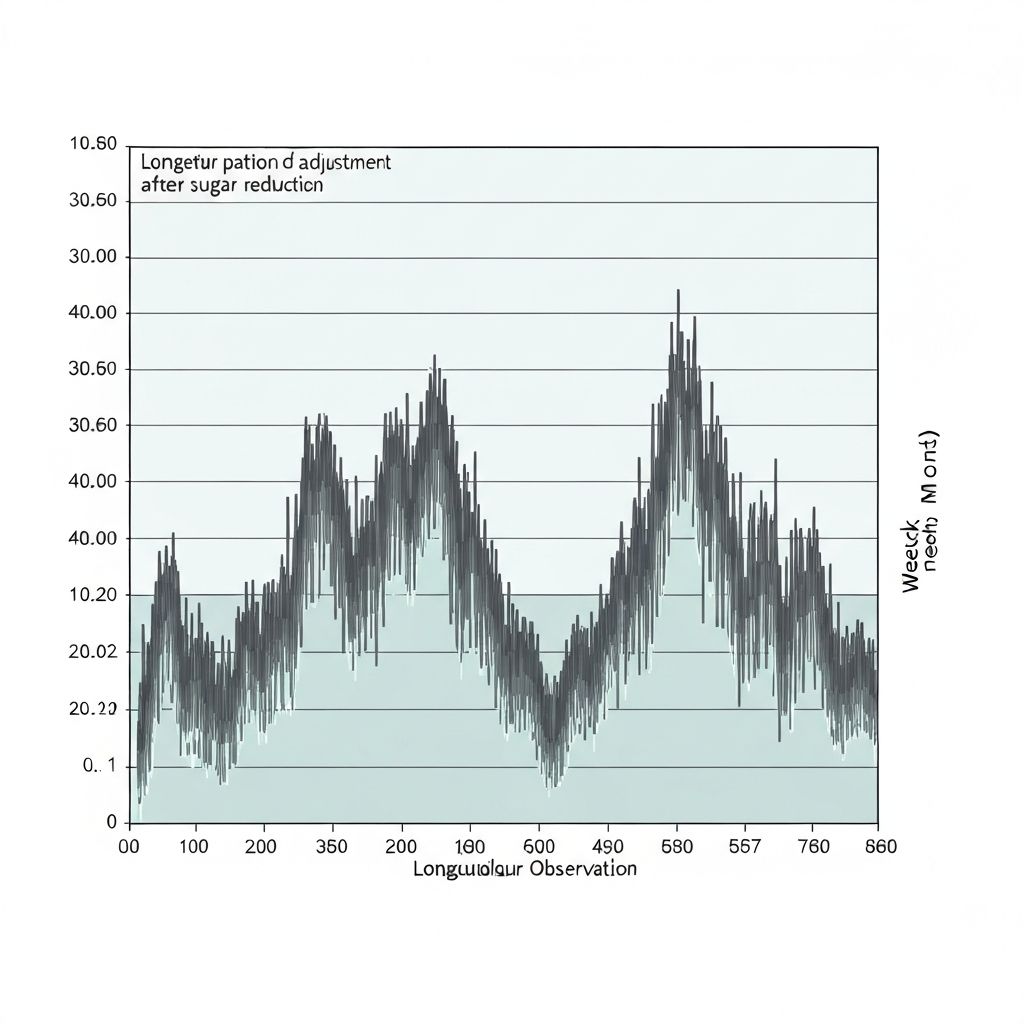
Temporal Patterns of Appetite Adjustment After Sugar Reduction
Evidence-based exploration of longitudinal changes in craving and appetite
Overview
Longitudinal studies examining appetite and craving patterns following periods of reduced sugar intake provide insight into the temporal dynamics of appetite system adjustment. While individual responses vary substantially, research observations reveal characteristic patterns in how craving intensity, taste preferences, and appetite regulation evolve over time in the context of reduced sugar consumption.
Initial Response Patterns
In the early period following reduced sugar intake, research observations include:
- Persistent or increased cravings: Many individuals report that cravings remain stable or even increase initially after reducing sugar intake
- Reward system responding to deprivation: The brain's reward system may increase sensitivity to food cues as intake decreases, creating more intense craving responses
- Withdrawal-like phenomena: Some individuals report symptoms resembling withdrawal, including irritability, fatigue, and intense food cravings
- High variability: Individual responses vary enormously, with some experiencing immediate craving reduction while others maintain high craving intensity
Intermediate Adjustment Period (Weeks to Months)
Over weeks to months following sustained reduction in sugar intake, several patterns emerge:
- Gradual taste preference shifts: Some individuals report that less-sweet foods gradually become more satisfying and palatable
- Variable craving intensity: Craving patterns often fluctuate rather than declining linearly; periods of lower cravings may alternate with renewed intensity
- Context-dependent changes: Cravings may decrease in some contexts while remaining strong in others
- Reward system sensitivity changes: Alterations in dopamine and other neurotransmitter systems may begin to manifest in gradually shifting preferences and reward responses
Longer-Term Patterns (Months and Beyond)
Research observations over longer durations include:
- Sustained preference changes: Some individuals report more stable shifts in taste preferences toward less-sweet foods
- Reduced cue reactivity: Food cues that previously triggered strong cravings may lose some of their power
- Continued variability: Individual responses remain highly variable; some show significant changes while others maintain relatively stable preferences
- Susceptibility to rebound: Even individuals showing long-term preference changes remain susceptible to rapid reactivation of cravings with renewed sugar exposure
Neurobiological Mechanisms Underlying Adjustment
Changes in appetite and preference following reduced sugar intake likely reflect neuroplastic adaptations in:
- Dopamine system: Potential recalibration of dopamine receptor sensitivity and baseline dopamine availability
- Taste perception: Potential restoration of taste receptor sensitivity following the removal of high-sugar adaptation
- Reward circuit connectivity: Changes in functional connections between reward-related brain regions
- Conditioned response strength: Gradual weakening of learned associations between cues and high-sugar food rewards
- Interoceptive processing: Changes in how the brain perceives and processes internal hunger and satiety signals
The Role of Individual Differences
Substantial variation in response to sugar reduction reflects:
- Genetic factors: Variations in genes affecting dopamine, opioid, and other reward system components
- Baseline reward sensitivity: Individuals with naturally high reward sensitivity may show different adjustment patterns
- Lifetime sugar consumption: Duration and intensity of prior high-sugar intake may influence adjustment rate
- Psychological factors: Motivation, stress levels, and concurrent lifestyle changes influence adjustment
- Environmental factors: Access to alternative foods, social support, and food environment characteristics
Non-Linear Adjustment Patterns
Important to recognize: adjustment is often non-linear. Rather than steady, progressive change, many individuals experience:
- Periods of relative stability alternating with periods of rapid change
- Context-dependent fluctuations based on stress, sleep, and other factors
- Temporary reversions to higher cravings despite sustained reduced intake
- Gradual rather than step-wise transitions in preference
Evidence from Research
Longitudinal studies document:
- Initial cravings often persist or intensify in the first days to weeks of reduced intake
- Some individuals report preference changes within weeks, while others show minimal changes over months
- Sustained reduction appears associated with gradual neurobiological adaptations reflected in changing taste preferences
- Reintroduction of high-sugar foods rapidly reactivates conditioned craving responses
Important Caveats and Limitations
When interpreting research on appetite adjustment:
- Research often relies on self-reported measures of craving and preference, which can be subjective
- Study populations may not be representative of all individuals
- Concurrent lifestyle changes (stress reduction, increased activity, social support) may influence observed changes
- The mechanisms underlying observed changes are not fully understood
Implications for Understanding Appetite Regulation
The temporal dynamics of appetite adjustment highlight the complexity of craving systems and the substantial individual variation in how these systems respond to dietary change. Adjustment appears to involve both rapid (neurochemical) and slower (neural plasticity) processes, resulting in non-linear patterns that vary considerably between individuals.
Educational content only. No promises of outcomes. This material describes observed patterns in longitudinal research and does not constitute predictions of individual outcomes or personal recommendations. Individual responses to changes in sugar intake vary tremendously. Consult qualified professionals regarding personal appetite or dietary concerns.
Return to research articles:
← Back to Research Articles